
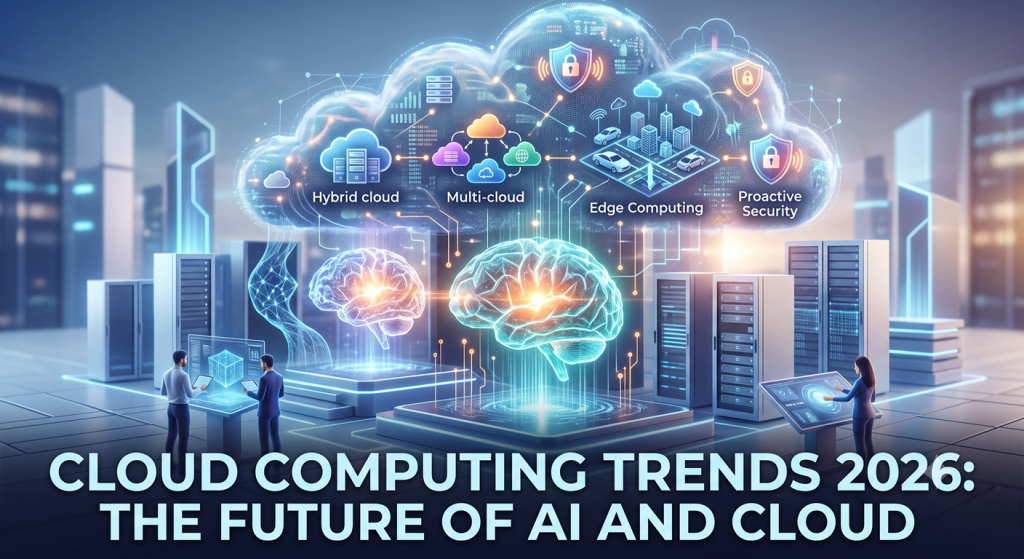

AI and Cloud Infrastructure are the two biggest forces changing the digital world today. Not long ago, Artificial Intelligence was seen as a “nice to have” tool. Now it is a “must have” for any business that wants to grow. At the same time, Cloud Infrastructure has become the base that makes fast, reliable, and smart AI tools possible. When you put AI and Cloud Infrastructure together, you get a powerful combination that is setting the new standard for professional success online.
In this article, we will break down what AI and Cloud Infrastructure really mean, how they work together, and why mastering both can give you a real edge — whether you are a developer, a content creator, a trader, or a business owner.
What Do We Mean by AI and Cloud Infrastructure?
Let’s keep this simple. AI (Artificial Intelligence) is software that can learn from data, spot patterns, and make decisions or predictions without a human doing every step by hand. Cloud Infrastructure is the network of remote servers, storage, and computing power that businesses rent instead of buying and running their own physical machines.
On their own, each one is useful. But together, AI and Cloud Infrastructure create something much bigger. AI needs huge amounts of computing power to work well, and Cloud Infrastructure is what supplies that power on demand, anywhere in the world. This is why almost every modern AI tool — from chatbots to trading bots to content generators — runs on some form of cloud server.
Why AI and Cloud Infrastructure Matter Right Now
The demand for AI and Cloud Infrastructure is growing fast because businesses are under pressure to move quicker, serve customers better, and cut costs. Here is why this combination matters so much today:
• Speed: Cloud servers can scale up in minutes, giving AI tools the power they need exactly when they need it.
• Cost savings: You only pay for what you use, instead of buying expensive hardware.
• Access: Small businesses and solo freelancers can now use the same AI and Cloud Infrastructure tools that big tech companies use.
• Reliability: Cloud providers offer strong uptime, backups, and security that most individual businesses could never build on their own.
This is why understanding AI and Cloud Infrastructure is no longer just a “tech person” skill. It is becoming a core business skill.
The Technical Backbone: How Cloud Servers Support AI
At the base of every strong AI and Cloud Infrastructure setup is a well-managed server. Professionals who know how to configure and manage cloud servers — for example, running an AWS EC2 instance on Ubuntu through the Linux terminal — hold a real advantage in this space.
Here is why this matters. An EC2 instance is basically a virtual computer that lives in Amazon’s data centers. You can turn it on, configure it, install software, and use it to run websites, apps, or AI models — all without owning a single physical server. This is the heart of AI and Cloud Infrastructure: renting exactly the computing power you need, right when you need it.
When someone sets up and manages this kind of environment correctly, they are building the backbone that lets AI models process data in real time. Without this backbone, even the smartest AI model would have nowhere to run.
Why the Linux Terminal Still Matters
A lot of AI and Cloud Infrastructure work still happens through simple, text-based commands in the Linux terminal. This might sound old-fashioned, but it is actually one of the fastest and most reliable ways to manage servers, install software, and automate tasks. Professionals who are comfortable in this environment can set up AI and Cloud Infrastructure systems faster and with fewer errors than those relying only on visual dashboards.
How AI and Cloud Infrastructure Are Changing Data Analysis and Content Creation
The impact of AI and Cloud Infrastructure goes far beyond servers and code. It is changing how people analyze data and create content, especially in fast-moving industries like cryptocurrency trading.
Predictive Modeling Beyond Traditional Indicators
For years, traders relied on tools like the Relative Strength Index (RSI) to guess where prices might go next. Today, AI and Cloud Infrastructure allow traders to go far beyond these older tools. Instead of one simple indicator, AI models can study thousands of data points at once — price history, trading volume, news sentiment, and more — to build predictive models that adjust in real time. This is only possible because Cloud Infrastructure supplies the heavy computing power these models need.
AI Is Supercharging Content Creation
Content creators are also feeling the impact of AI and Cloud Infrastructure. In “Write to Earn” programs, AI tools are helping writers produce more content, faster, without losing quality. AI can help with research, drafting, editing, and even repurposing one article into several formats. Combined with Cloud Infrastructure, creators can run these AI tools at scale, publishing more content across more platforms in less time.
Bridging Development and Visibility with WordPress and AI
Many businesses run their websites on WordPress, and this is another place where AI and Cloud Infrastructure work hand in hand. By combining strong technical WordPress development with AI-assisted marketing and SEO strategy, developers can bridge the gap between complex backend code and real search engine visibility. This means a website is not just fast and functional — it is also built to be found by the right audience through search engines.
Performance: The Real Test of AI and Cloud Infrastructure
Speed is not just a nice feature. It is often the deciding factor between a website that grows and one that loses visitors. This is where AI and Cloud Infrastructure prove their real value.
Redis Caching and PageSpeed Scores
One clear example of strong AI and Cloud Infrastructure work is server-side optimization using tools like Redis caching. Redis stores frequently used data in fast memory instead of pulling it from a slower database every time. This can dramatically cut page load times.
Achieving a high score — such as 93 out of 100 — on Google PageSpeed Insights through this kind of optimization is a real, measurable proof of technical skill. Page speed is not just about user happiness. Search engines like Google also use speed as part of how they rank websites, so faster sites tend to get more visibility. This is a clear, practical example of how mastering AI and Cloud Infrastructure creates real, measurable business value.
Why Performance Drives Competitive Advantage
Professionals who combine strong performance optimization with AI and Cloud Infrastructure tools are far better positioned to win work in competitive freelance markets like Upwork and Guru.com. Clients notice the difference between a slow, clunky website and a fast, smooth one — and they are willing to pay more for the second kind.
A Practical Example of AI and Cloud Infrastructure in Action
Let’s look at how this plays out in real, everyday work. When a developer configures an AWS EC2 instance running Ubuntu through the Linux terminal, they are not just doing a technical task. They are building the foundation that allows advanced AI models to process data in real time. This is AI and Cloud Infrastructure working together at the most basic, practical level.
From there, optimizing a website to reach a 93 PageSpeed Insights score using Redis caching shows how technical mastery of cloud resources directly improves the user experience. When these technical optimizations are combined with AI-driven content creation, the result is a digital ecosystem that is both fast and highly engaging. This is the real promise of AI and Cloud Infrastructure: not just powerful technology, but technology that actually works better for real people.
This kind of combined skill set is exactly what makes a professional stand out in competitive freelance markets, where clients are constantly comparing speed, quality, and results.
The Future: AI Training, Evaluation, and Beyond
The story of AI and Cloud Infrastructure is still being written. As AI systems become more advanced, the demand for people who can train and evaluate these systems is growing quickly. This is a new kind of job that barely existed a few years ago, and it sits right at the intersection of AI and Cloud Infrastructure.
Building a strong foundation in both technical development and strategic content creation will remain one of the best ways to stay ahead. Whether you are managing servers, building websites, creating content, or evaluating AI models, understanding how AI and Cloud Infrastructure work together will keep you relevant as the digital landscape keeps changing.
Final Thoughts on AI and Cloud Infrastructure
AI and Cloud Infrastructure are no longer separate topics — they are two halves of the same story. Cloud Infrastructure gives AI the power it needs to run, and AI gives Cloud Infrastructure a reason to keep growing and improving. Together, they are reshaping how businesses handle data, create content, and compete online.
For professionals who want to grow, the message is clear: learning to work confidently with AI and Cloud Infrastructure is not optional anymore. It is quickly becoming the foundation of modern digital work.
Ready to elevate your digital presence?
Whether you need high-performance WordPress development, AWS infrastructure management, or strategic SEO content, let’s turn your vision into results. Connect with me today to discuss your next project.